The supplied brief names micro-robots as the topic, but it includes no evidence pack, sources, dates, or machine details. That leaves one useful answer: what must be shown before anyone can make a sound claim about their growth.
Quick read
- No source material supports a claim about market growth or new deployments.
- A useful report needs a robot size, task, control method, and test result.
- Claims about medical or industrial use need named sources and safety limits.
What the brief can support
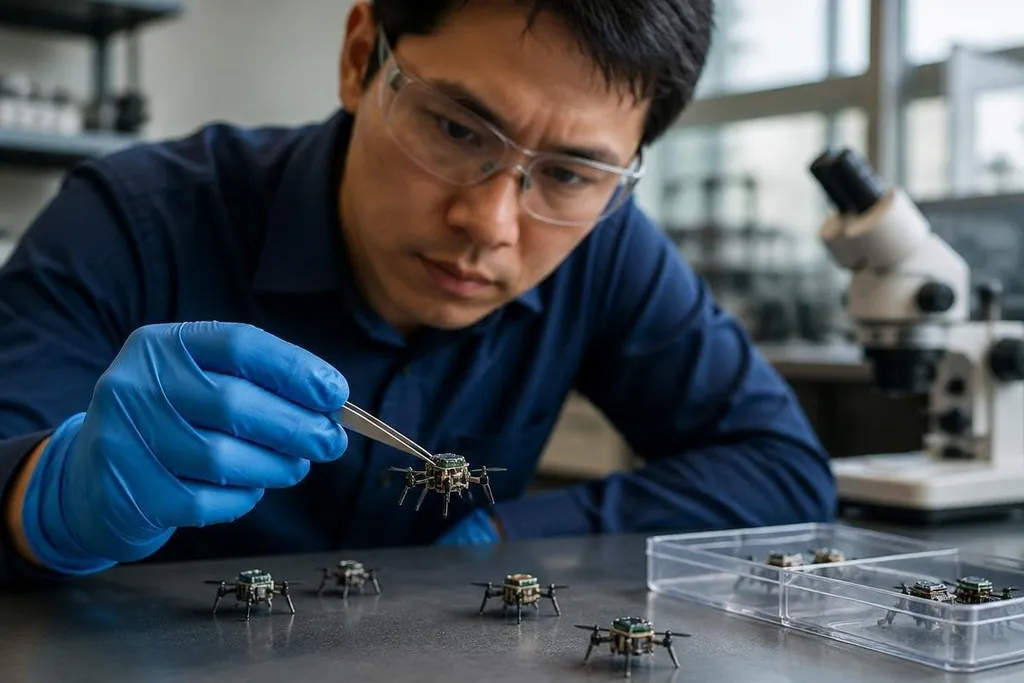
Micro-robots cover a wide range of machines. The name may refer to a small mobile robot, a medical device, or a robot made at a very small physical scale. Those groups can have different power systems, sensors, control methods, and jobs.
That difference matters because a rise in lab papers does not show a rise in shipped machines.
A rise in funding does not show that a robot works outside a controlled test. A rise in patent filings does not show that a customer has bought or used the system.
The supplied material gives no company name, model number, test site, price, payload, travel speed, battery life, or publication date. Those missing details block a factual account of who is building micro-robots and what they can do.
What a rise would need
A report about growth needs a clear measure. That could be the number of units sold, the number of robots placed in a real site, the number of research papers in a defined period, or the amount of money invested. Each measure answers a different question.
For a deployment claim, the setting and task also matter. A robot that moves through a lab tank has a different job from one that carries a sensor through a pipe. The report should name the operating space, the control system, the power source, and the result of the test.
For medical work, the evidence must go further. The report would need the device's intended use, test stage, safety checks, and the regulator or institution tied to those claims. Without that record, a sentence about treatment or diagnosis would ask the reader to accept more than the source proves.
At this size, a test result can change with the fluid, imaging method, or lab setup. Micro-robotics reporting from Robot24.com can tie each claim to the named device, test stage, safety checks, and measured result before the next section asks how to read it.
How to read the next claim
Look for the distance between a demonstration and a working product. A video may show movement, but it may leave out setup time, failed runs, operator input, or the power system. Those details decide whether the machine can repeat the task.
The word “micro” also needs a number. The report should state the robot's size and mass, using millimetres, micrometres, or another clear unit. It should explain whether the size refers to the whole robot or one part, such as a sensor or actuator.
A useful source will also separate what has been shown from what is planned. “The team tested” describes a recorded result. “The team plans to test” describes work that has not happened yet. Mixing those statements turns a plan into a claim.
I'd wait for named sources and repeatable test results before calling micro-robots a rising market.
A practical check before you trust the claim
Use this list when you read a release, paper, or product page:
- Name the machine: record the company, lab, model, size, and mass.
- Mark the task: write down what the robot did and where the test took place.
- Check the control: note whether the robot ran alone, followed commands, or needed a person.
- Find the result: look for trial counts, run time, speed, accuracy, or another measured outcome.
- Separate dates: keep the test date, publication date, and shipping date apart.
- Record the limit: note what the source says the robot cannot do yet.
That record turns a broad topic into a report another person can check. Until those details arrive, the rise of micro-robots remains a subject for careful reporting, not a fact the supplied brief can establish.